
Tracy Chapman Husband: Secrets Behind Her Private Life
When people search for Tracy Chapman husband, they often discover something far more compelling than a simple answer: a story of an artist who has guarded her heart with the same fierce intentionality she brings to every lyric she writes. Born on March 30, 1964, in Cleveland, Ohio, Tracy Chapman rose from humble beginnings to become one of the most celebrated singer-songwriters in modern music history.
Songs like Fast Car, Give Me One Reason, and Talkin’ Bout a Revolution didn’t just chart, they became anthems of hope, struggle, and identity for millions worldwide.
Despite spending decades in the public eye, Tracy Chapman married life remains a blank page by design. She has never confirmed a husband or wife, and her romantic relationships have remained almost entirely out of the press.
For a star of her magnitude, this level of discretion is rare and deeply intentional. Is Tracy Chapman married? Does she have a partner? This article dives deep into everything known and everything whispered about her personal life, relationships, career, and enduring legacy.
Table of Contents
Profile Summary
Before exploring the details of Tracy Chapman’s private life and relationships, it helps to understand who she is at a glance. The table below captures the key facts about one of music’s most enduring icons, from her birthplace and education to her estimated net worth and relationship status.
Tracy Chapman’s life is a study in contrasts deeply public through her art, deeply private in everything else. She turned her working-class upbringing into Grammy-winning storytelling and her personal beliefs into a lifelong commitment to social justice and humanitarian causes.
| Category | Details |
| Full Name | Tracy Chapman |
| Date of Birth | March 30, 1964 |
| Birthplace | Cleveland, Ohio, USA |
| Age (2025) | 61 Years Old |
| Nationality | American |
| Profession | Singer-Songwriter, Guitarist, Social Activist |
| Famous Songs | Fast Car, Give Me One Reason, Talkin’ Bout a Revolution |
| Education | Tufts University – Anthropology & African Studies |
| Relationship Status | Unmarried – Rumored Partner: Guinevere Turner |
| Estimated Net Worth | Approximately $6 Million |
| Current Residence | San Francisco, California |
| Known For | Privacy, Social Activism, Female Empowerment, Folk-Soul Music |
Who Is Tracy Chapman’s Husband or Partner?
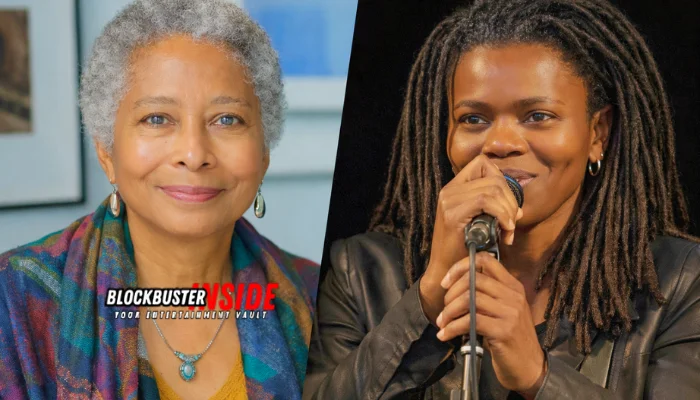
Let’s address the central question directly: Tracy Chapman does not have a husband. She has never been married and has not publicly acknowledged any romantic partner by name. When fans ask ‘is Tracy Chapman married,’ the honest answer is no at least not in any legally or publicly documented sense. What does exist, however, is a long-rumored and widely reported connection to Guinevere Turner, a screenwriter, actress, and director who has been linked to Chapman since approximately 2010.
Their relationship has never been confirmed in a formal interview or statement, but multiple credible sources and public appearances suggest a deep and lasting bond between the two women. Tracy Chapman’s partner, in the eyes of much of the public and many entertainment journalists, is Guinevere Turner. Whether they have a now husband Tracy Chapman equivalent meaning a formal life partner is something neither woman has officially addressed. What is clear is that their connection reflects mutual respect, creative kinship, and emotional depth that transcends celebrity gossip.
Meet Guinevere Turner – Tracy Chapman’s Rumored Partner
Guinevere Turner is a formidable creative force in her own right. Born on May 23, 1968, in Boston, Massachusetts, she grew up in circumstances that would have derailed most people raised within an isolated commune known as The Lyman Family (also called The Fort Hill Community), a strict, controlling group that discouraged individual expression and outside connections. Despite those early challenges, Turner emerged as one of the more distinctive voices in independent cinema and queer storytelling.
She attended Sarah Lawrence College in New York, where she discovered her passion for film and writing and began to embrace her identity as a queer woman. Her groundbreaking 1994 film Go Fish which she co-wrote and starred in became a landmark of LGBTQ+ cinema, celebrated at Sundance and beyond.
Turner later wrote for The L Word, co-wrote American Psycho, and penned a memoir about her cult childhood. She is, in every sense, Tracy Chapman’s intellectual and creative equal, a woman who has transformed personal pain into powerful art.
How Did Tracy Chapman and Guinevere Turner Meet?

The story of how Tracy Chapman and Guinevere Turner came to know each other reads like something from one of Chapman’s own folk narratives: quiet, organic, and free of spectacle. Reports indicate the two women were introduced around 2010 through shared circles in the Los Angeles creative community, a world where musicians, filmmakers, activists, and artists regularly intersect.
Their first notable public appearances together came that same year, when they attended the Frameline Film Festival and the Outfest Gay and Lesbian Film Festival in Los Angeles.
Turner was at Outfest to support her film The Owls, a project with strong LGBTQ+ themes. Chapman, though not promoting anything at the time, attended alongside her.
Observers at both events noted the warmth between the two women, and romantic speculation followed naturally. Over the years that followed, they reportedly divided their time between San Francisco where Chapman has long maintained a home and Los Angeles, where Turner’s film career keeps her anchored. Their connection deepened away from flashbulbs and red carpets, which suits both women perfectly.
Guinevere Turner’s Early Life and Education
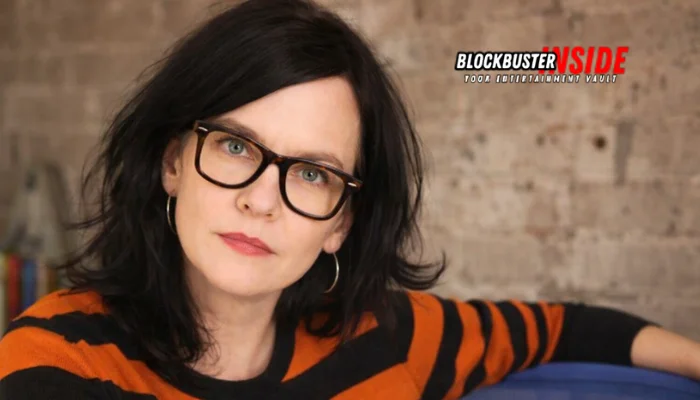
Guinevere Turner’s early years were defined by the unusual world of a closed religious commune. The Lyman Family, based partly in Boston and partly on a hill community in rural Massachusetts, operated under the strict authority of musician Mel Lyman.
Children born or raised in this group experienced a form of controlled living that discouraged individual relationships including those between parents and children. Turner has spoken openly about being separated from her mother, Bess, at a very young age, a separation that left lasting emotional scars.
After her mother eventually left the community when Turner was around eleven, Guinevere faced a new set of challenges adapting to mainstream life. She later revealed in her memoir When the World Didn’t End that she experienced abuse during this transitional period as well. Despite all of this, she channeled her experiences into storytelling rather than silence.
At Sarah Lawrence College, she found her voice studying film and creative writing, graduating with a keen awareness of how narrative could reclaim pain and transform it into meaning. That education, rooted in resilience, became the foundation of everything she created.
Tracy Chapman’s Relationship History
Tracy Chapman’s relationship history is a trail of whispers rather than declarations. The most high-profile rumored connection before Guinevere Turner was with Alice Walker, the Pulitzer Prize-winning author of The Color Purple.
Their relationship reportedly blossomed in the mid-1990s, a time when both women were at prominent points in their careers. Walker, in a rare candid moment, described the relationship in warm and affectionate terms, calling it a beautiful and nourishing experience. Though neither woman made any formal announcement, the connection was widely known within literary and music circles.
Other names that have circulated in connection with Tracy Chapman over the years include filmmaker Rose Troche and a rumored brief connection with Rebecca Walker, Alice’s daughter. None of these have been confirmed, and Chapman has consistently refused to comment on her romantic life in any interview or public statement.
This steadfast privacy isn’t about denial, it’s about ownership. Chapman has always believed her personal relationships belong to her alone, not to public consumption. That philosophy, combined with her deeply introspective songwriting, has allowed her to remain both mysterious and universally relatable at the same time.
Did Tracy Chapman Ever Get Married or Have Children?
To put it simply: no, Tracy Chapman has never been married, and there is no evidence that she has children, biological or adopted. Questions like ‘is Tracy Chapman married’ and ‘did Tracy Chapman have kids’ are among the most common searches her name generates, which speaks to how much curiosity surrounds her personal world.
The absence of a husband Tracy Chapman would traditionally be paired with has never troubled her and it’s not meant to trouble her fans, either. Her relationship choices reflect a deliberate, values-driven approach to life.
Chapman’s preference for companionship over legal partnership aligns with her broader worldview, one that prizes authenticity, freedom, and genuine connection over social convention. Her rumored partner Guinevere Turner has expressed similar sentiments in various interviews, noting that relationships don’t need formal labels to be deeply meaningful.
For Chapman, whose songs like Fast Car explore themes of escape from stifling expectations, the choice to live outside traditional relationship structures is entirely consistent with her identity and her art. She is, in every sense, someone who lives by her own compass.
Tracy Chapman’s View on Love and Privacy
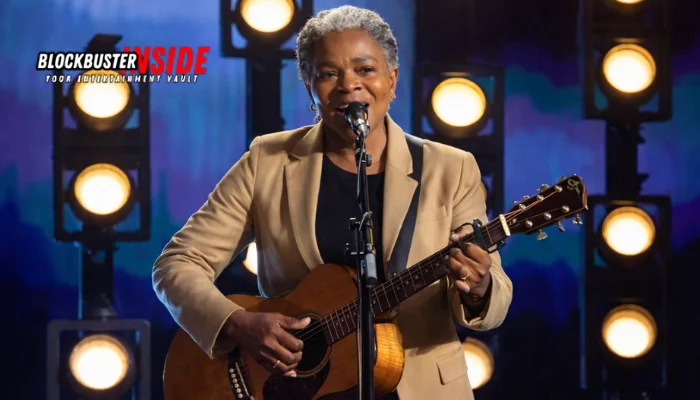
Tracy Chapman’s relationship with privacy is not merely a celebrity quirk, it is a philosophical stance. In a culture that rewards oversharing and turns personal moments into promotional material, Chapman has consistently chosen silence as a form of self-respect.
She has explained in rare interviews that she believes strongly in protecting the people she loves from the invasive nature of fame, and that relationships nurtured in the public eye often suffer because of that exposure. Her love life is hers, and she guards it accordingly.
That said, her views on love are not cold or dismissive. Her songwriting reveals a deeply romantic inner world, one full of longing, tenderness, and the complex emotions that come with loving someone through life’s difficulties. Her music is her emotional autobiography, even when she refuses to annotate it.
Those who have spent time with Chapman describe her as warm, thoughtful, and quietly intense, someone who listens more than she speaks and who loves with genuine depth. In choosing to keep Guinevere Turner out of the press, she isn’t hiding her relationship. She’s preserving it.
Tracy Chapman’s Career Highlights
Tracy Chapman’s career is one of the most remarkable in contemporary music history. When her self-titled debut album dropped in 1988, it defied every trend of the era. In a pop landscape dominated by synth-heavy production and flashy image-making, here was a young Black woman from Cleveland with an acoustic guitar, singing about poverty, revolution, and escape with uncommon emotional clarity.
The album sold over 20 million copies worldwide and produced Fast Car, a song that would go on to be recognized as one of the greatest ever recorded.Her success continued through seven more studio albums, including Crossroads (1989), New Beginning (1995), and her final album Our Bright Future (2008). She won four Grammy Awards and earned over 20 nominations across her career.
Her 1995 hit Give Me One Reason became a crossover radio staple, introducing her to an entirely new generation of fans. Beyond the music itself, Chapman’s willingness to use her platform for social activism performing at anti-apartheid concerts, advocating for racial justice, and lending her voice to feminist causes cemented her status as more than a musician. She became a cultural force.
Tracy Chapman’s Musical Inspirations and Early Influences
Chapman’s musical roots draw from a rich and diverse well of influences. Growing up in Cleveland, she was surrounded by the sounds of blues, soul, and gospel, the foundational music of Black American life. She taught herself guitar at age eight using an instrument her mother bought at a secondhand store, and she began writing songs almost immediately.
Those early compositions already showed a maturity of emotion that would become her trademark. Artists like Joni Mitchell, Bob Dylan, and Nina Simone left deep impressions on her developing style as she absorbed their storytelling instincts and political consciousness.Her time at Tufts University, where she studied Anthropology and African Studies, expanded her worldview significantly.
She performed on the streets of Cambridge and Boston during this period, honing her craft in real-world settings before she ever stepped into a professional recording studio. The folk revival happening around her at Tufts connected her to a tradition of music as social commentary, a tradition she would carry forward with singular conviction. By the time a demo tape found its way to SBK Publishing, which ultimately led to her deal with Elektra Records, she was already a fully formed artist with a distinct voice and something urgent to say.
Why Did Tracy Chapman Stop Singing or Retire from Music?
The question of why Tracy Chapman retired from the music industry or at least stepped back significantly is one fans have wrestled with for years. After releasing Our Bright Future in 2008, Chapman quietly withdrew from the touring circuit and public appearances. She never issued a farewell statement or retirement announcement. She simply stopped. For someone who had spent two decades giving interviews and performing around the world, the withdrawal was sudden enough to generate concern and curiosity in equal measure.
The reality is both simple and entirely in keeping with who she is. Chapman grew weary of an industry that often tried to define artists by their personal lives rather than their work, and she found the constant media attention increasingly at odds with her core values. She has described her preference for a grounded, peaceful life one filled with reading, gardening, writing, and community involvement rather than touring schedules and press junkets.
She made rare appearances that remained memorable: a 2020 performance of Talkin’ Bout a Revolution on Late Night with Seth Meyers, and most dramatically, a performance of Fast Car alongside Luke Combs at the 2024 Grammy Awards. That Grammy duet, an emotional bridge between generations reminded the entire music world that Tracy Chapman’s power remains entirely intact. Whether she chooses to record again is her decision alone, and that is exactly as it should be.
Tracy Chapman’s Influence and Music Legacy
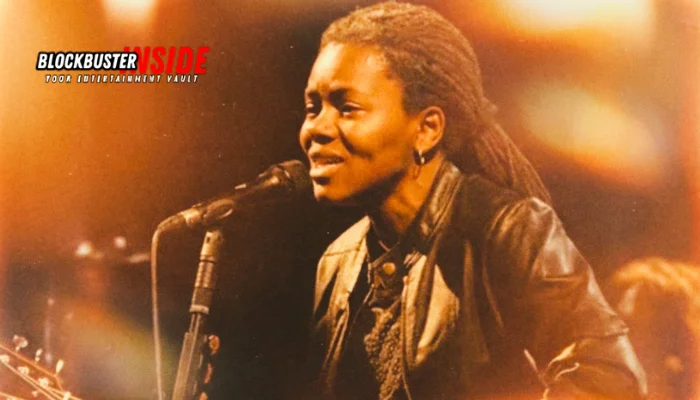
Few artists have left a mark on popular music as enduring as Tracy Chapman’s. At a time when mainstream music was dominated by manufactured pop and MTV spectacle, she proved that a single voice and a single guitar could silence an arena. Her influence on subsequent generations of singer-songwriters is immeasurable from Adele and Tracy Chapman comparisons in early interviews to Brandi Carlile’s open acknowledgment of her as a touchstone, the reverberations of Chapman’s artistry are everywhere. She demonstrated that depth sells, that authenticity endures, and that audiences hunger for music that speaks to something real.
Rolling Stone ranked Fast Car among the 500 Greatest Songs of All Time, and that honor is well deserved but it barely scratches the surface of her influence. Her songs appear in documentaries about civil rights, in classrooms studying social inequality, and in the playlists of activists preparing for marches. She changed what people believed a Black woman’s voice could sound like in mainstream folk and rock music, expanding the genre’s definition by simply existing within it and excelling. Her music legacy isn’t just a body of work, it’s a permission slip for every artist who came after her to tell the truth without compromise.
Challenges and Struggles in Tracy Chapman’s Career
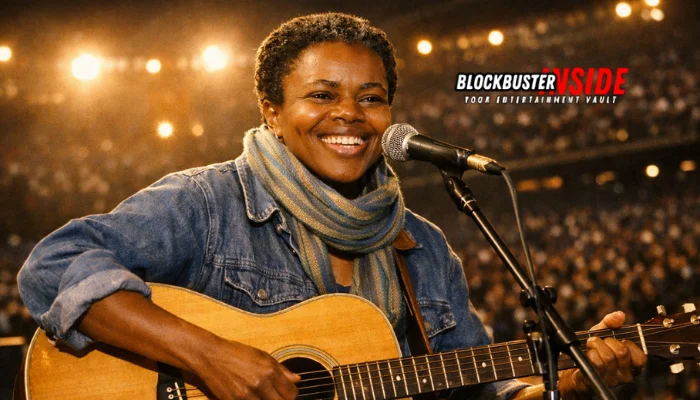
Chapman’s path to success was never frictionless. As a Black woman playing folk and acoustic rock in the late 1980s, she occupied a space that the industry wasn’t entirely prepared for. Radio programmers weren’t always sure how to categorize her, and some outlets were slow to embrace her work.
Her breakthrough at the Nelson Mandela 70th Birthday Tribute concert at Wembley Stadium in 1988 where she performed to an audience of hundreds of millions watching worldwide came largely by accident. The originally scheduled performer withdrew at the last minute, and Chapman stepped in with just an acoustic guitar. The response was extraordinary, and her debut album rocketed to the top of charts in both the US and UK almost overnight.
Beyond industry challenges, Chapman also navigated the deeply personal difficulty of being a private person in an era when celebrities were expected to be transparent. Her refusal to discuss her romantic life drew both admiration and frustration from journalists and fans. She also filed a successful lawsuit against pop singer Nicki Minaj in 2018 for copyright infringement, when Minaj sampled Fast Car without permission in a song that leaked online. Chapman won, reinforcing her fierce protectiveness not just of her personal life, but of her creative legacy as well. Every obstacle she faced, she met with the same quiet resolve that defines her music.
Is “Fast Car” a Lesbian Anthem?
The question of whether Fast Car is a lesbian anthem has been part of cultural conversation since the song was released. At its surface, the track is a story about two people trying to escape poverty and build a better life together. But the lyrics are notably free of gendered pronouns, and Chapman, whose rumored lesbian relationships have been public knowledge for decades never specified the narrator’s identity or the gender of the person they were singing to. That ambiguity was almost certainly intentional, and it opened the door for LGBTQ+ listeners to claim the song as their own.
For queer women especially, the song has long carried an additional layer of meaning: the desire to escape not only financial hardship but also the suffocating expectations of a heteronormative world. Chapman has never confirmed this reading of the song, but she has never denied it either.
Her silence on the matter is consistent with her broader philosophy: her songs belong to the people who need them, not to a single narrow interpretation. That openness, whether deliberate or organic, is part of what makes the song transcendent. It is simultaneously a story about class struggle, romantic longing, queer longing, and the universal human wish to drive away and start over somewhere new.
Tracy Chapman’s Net Worth and Achievements
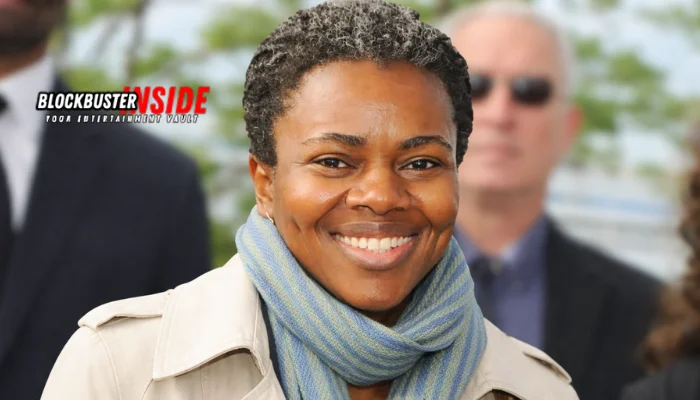
Tracy Chapman’s net worth is estimated at approximately $6 million, a figure that reflects decades of album sales, royalty income, licensing agreements, and selective live performances. Her debut album alone sold over 20 million copies worldwide, generating substantial revenue that continues to compound through streaming and sync licensing. Her songs have appeared in films, television shows, and even political campaigns each use adding to a financial legacy that is notable for someone who has always prioritized artistic integrity over commercial pursuit.
Beyond the financial numbers, Chapman’s real wealth lies in cultural currency. She commands immense respect across musical genres and generations, a rare position that few artists occupy. Her 2024 Grammy performance with Luke Combs, during which she received a standing ovation from the entire arena, illustrated how deeply she is valued by her industry peers. Her ongoing royalty income from Fast Car alone which experienced a dramatic resurgence after Combs’ country cover became a massive hit in 2023 is estimated to have significantly boosted her earnings in recent years.
Awards and Honors:
Tracy Chapman’s awards and recognitions reflect the breadth of her artistic impact. Her major accolades include:
• Grammy Award for Best New Artist (1989)
• Grammy Award for Best Contemporary Folk Album – Tracy Chapman
• Grammy Award for Best Female Pop Vocal Performance – Give Me One Reason
• Grammy Award for Song of the Year – Fast Car (shared with Luke Combs, 2024)
• Multiple NAACP Image Award nominations throughout her career
• Honorary recognition from numerous humanitarian organizations for her social activism
• Rolling Stone’s 500 Greatest Songs of All Time – Fast Car
• Inducted into circles of influence for advancing LGBTQ+ visibility through music
Where Does Tracy Chapman Live Now?
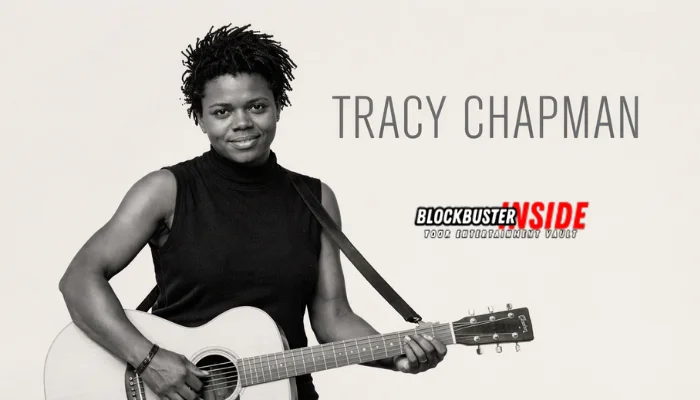
Tracy Chapman currently lives in San Francisco, California, a city whose progressive values and vibrant arts community align naturally with her own worldview. She has maintained a residence in the Bay Area for many years, favoring its artistic energy and relative calm compared to the relentless pace of Los Angeles. San Francisco’s history as a hub for political activism, LGBTQ+ rights, and creative expression makes it an ideal home for someone with Chapman’s values and temperament.
Her home, by all accounts, is modest and deliberately unglamorous, a reflection of the minimalist lifestyle she has always lived. She is occasionally spotted at local bookstores, farmers markets, and community events, often without any celebrity fanfare. Neighbors and locals describe her as friendly, approachable, and deeply private not a paradox, but a balance.
She travels periodically to Los Angeles, where Guinevere Turner’s career keeps her anchored to the film industry, and occasionally to other cities when artistic or activist commitments draw her. But San Francisco is, and has long been, her home base and her haven.
Tracy Chapman’s Current Life and Privacy
In 2025, Tracy Chapman leads a life that looks nothing like the conventional celebrity existence, and she wouldn’t have it any other way. She has no active social media presence on any major platform: no Instagram, no Twitter/X, no TikTok. In an era when visibility is often treated as a form of professional survival, her absence from those spaces is itself a statement. She exists as she always has: on her own terms, in her own time, and at her own pace. Those who know her report that she remains intellectually vibrant, creatively engaged, and deeply connected to the causes she has always championed.
Her day-to-day life reportedly includes a great deal of reading; she has been described as a voracious reader of poetry, literary fiction, and social theory. She gardens, mentors younger artists quietly, and remains involved in charitable work around educational equity and women’s empowerment. She doesn’t give interviews. She doesn’t attend premieres or award shows unless the occasion is truly meaningful to her. Tracy Chapman’s current life is the most authentic version of her life yet unhurried, purposeful, and entirely her own.
Guinevere Turner’s Career and Impact
Guinevere Turner’s contributions to LGBTQ+ cinema and independent film are substantial enough to stand entirely on their own, separate from her association with Tracy Chapman. Her 1994 debut feature Go Fish, which she co-wrote with Rose Troche, was one of the first American films to depict queer women’s lives with honesty, humor, and warmth. It premiered at Sundance and went on to become a touchstone of New Queer Cinema, a movement that reshaped how gay and lesbian stories were told on screen. Turner’s willingness to write from her own experience, without apology or overexplanation, set a standard that many filmmakers have followed since.
Her subsequent work expanded her reach considerably. She co-wrote the screenplay for American Psycho (2000), one of the most critically dissected films of its era, and wrote for The L Word, the groundbreaking Showtime series that gave lesbian relationships genuine mainstream television representation for the first time. Her memoir, When the World Didn’t End, published in 2024, received widespread critical praise for its unflinching account of her cult upbringing and healing journey. Turner’s estimated net worth sits around $3 million, drawn from screenwriting, acting, directing, and book royalties. As a filmmaker, she embodies the same fearlessness that Tracy Chapman brings to music.
Tracy Chapman and Guinevere Turner’s Relationship Today
As of 2025, Tracy Chapman and Guinevere Turner are believed to remain in a close, committed partnership, though neither has confirmed this publicly in any recent statement or interview. Their relationship, now spanning roughly fifteen years, has evolved quietly and steadily away from press scrutiny and away from the performative relationship displays that dominate celebrity culture. They reportedly continue to divide their time between San Francisco and Los Angeles, maintaining the same geographical rhythm that has characterized their life together since the early 2010s.
People who have encountered them in social settings describe the dynamic between them as warm, easy, and grounded, the kind of comfort that only comes from years of genuine knowledge. Turner, who is more publicly visible than Chapman due to her ongoing work in film and television, has occasionally spoken in interviews about her personal life in general terms, emphasizing that she values depth and emotional authenticity in her relationships. Her words describe Tracy Chapman almost perfectly. For fans who admire both women, their connection however they choose to define it represents a beautiful alignment of artistic souls who found in each other something rare and worth protecting.
Facts About Tracy Chapman’s Life
There is more to Tracy Chapman’s biography than her music alone. The table below highlights some of the most important and fascinating facts about her life from her childhood in Cleveland to her adult years as a globally respected humanitarian and artist. Understanding these details enriches the full picture of who she is.
Chapman’s story is one of remarkable transformation from a child in a single-parent home in working-class Ohio to one of the most decorated and respected musicians in the world. Every chapter of her life reflects consistency of character: curious, principled, and creatively driven.
| Aspect | Fact |
| Early Childhood | Raised in Cleveland, Ohio by her mother Julie after her parents divorced |
| Scholarship | Won a full scholarship to the Wooster School in Connecticut as a young teen |
| University | Graduated from Tufts University with a degree in Anthropology and African Studies |
| Guitar | Learned to play guitar at age 8; primarily self-taught |
| Breakthrough Moment | Spontaneous Wembley performance at Nelson Mandela’s 70th Birthday concert in 1988 |
| Copyright Victory | Won lawsuit against Nicki Minaj in 2018 for unauthorized sampling of Fast Car |
| Personal Beliefs | Spiritual but not affiliated with any organized religion |
| Lifestyle | Minimalist; avid reader, gardener, and community volunteer |
| Children | Has no known biological or adopted children |
| Known Associates | Long-standing friendship with author Alice Walker and journalist Gayle King |
Tracy Chapman’s Influence on LGBTQ+ Representation
Tracy Chapman’s impact on LGBTQ+ representation in music is profound even by the standards of someone who has never issued a public statement about her own sexuality. Her rumored relationships with women most notably Alice Walker and Guinevere Turner combined with her artistry and her refusal to conform to heteronormative expectations, have made her a quiet hero within the queer community for decades. She came of age in the 1980s, when the AIDS crisis was devastating gay communities and LGBTQ+ visibility in mainstream entertainment was still largely suppressed. The fact that she simply existed, thrived, and refused to apologize for who she was carried enormous symbolic weight.
Her music has served as a gathering space for queer listeners who found in her storytelling a reflection of their own desires for love, freedom, and dignity. Artists within the LGBTQ+ community consistently cite her as an influence, and her songs are regularly featured at Pride events and in queer cinema soundtracks.
Her relationship with Guinevere Turner, a woman whose entire career is dedicated to LGBTQ+ storytelling amplifies that legacy further. Together, they represent a generation of queer women who didn’t ask for permission to exist boldly. They simply did it, and the culture is richer for it.
Fan Theories and Public Speculations About Tracy Chapman
Tracy Chapman’s silence has, predictably, generated a rich ecosystem of fan theories and public speculation. Online communities have spent years analyzing her lyrics for hidden autobiographical details, her body language at rare public events for clues about her relationships, and her social connections for hints about what her current life looks like. Among the most persistent theories is the idea that Fast Car is a deeply personal narrative about her own romantic relationships rather than a fictional account, a theory that many fans find compelling given the song’s emotional specificity.
Others speculate about whether she is currently working on new music in secret, or whether the Grammy 2024 appearance signaled an imminent comeback. Some fan communities have noted similarities between her musical phrasing and that of several artists who emerged in the 2010s, leading to theories about private mentoring relationships.
The reality is that Tracy Chapman’s privacy fuels her mystique, and her mystique fuels the fan theories. She has never discouraged this speculation directly; her silence is itself a form of engagement with the public imagination. Whether any of the theories are accurate matters far less than the fact that she inspires people to keep thinking, keep listening, and keep caring.
Tracy Chapman’s Social Activism and Feminist Voice
Tracy Chapman’s activism has never been a side project; it has always been central to her identity as an artist and a human being. From the very beginning of her career, she used her songs to address issues that much of mainstream music avoided entirely: homelessness, domestic violence, racial injustice, economic inequality, and the failure of political systems to protect ordinary people. Talkin’ Bout a Revolution wasn’t just a catchy folk song, it was a call to collective action rooted in the tradition of Pete Seeger and Woody Guthrie, updated for a new era. Across Mountains from Mountains, she addressed the devastation of the AIDS crisis at a time when many public figures refused to acknowledge it.
Her feminist voice emerges not through declaration but through lived commitment. She has performed at benefit concerts for human rights organizations, supported reproductive rights campaigns, donated to women’s shelters, and spoken at universities about the intersection of art and social responsibility.
Her close relationship with Guinevere Turner herself a feminist filmmaker and survivor of childhood abuse suggests that these values are part of her intimate world as well as her public persona. Tracy Chapman doesn’t march for causes she doesn’t live. Her activism and her art are woven from the same cloth, and both are made stronger for it.
Unknown Facts and Trivia
Beyond the well-known highlights of her biography, there are dozens of fascinating details about Tracy Chapman’s life that even dedicated fans may not know. These smaller facts add texture and humanity to a figure who is often seen primarily through the lens of her artistic achievements. They reveal a woman with deep intellectual curiosity, unexpected quirks, and a consistently principled approach to even the smallest decisions in her life.
Here are some of the lesser-known facts and trivia that round out the full picture of who Tracy Chapman really is:
• She performed at Nelson Mandela’s 70th Birthday Tribute at Wembley as a last-minute replacement and her performance was watched by an estimated 600 million people globally.
• Chapman is left-handed but plays guitar right-handed, a rare combination that contributes to her distinctive fingerpicking style.
• She has a strict personal policy against allowing her music to be used in political campaign advertising, regardless of the candidate or cause.
• Her song Baby Can I Hold You was covered by Boyzone in 1997 and became one of their biggest international hits, introducing Chapman’s songwriting to a mainstream pop audience.
• She is said to be an avid reader of The New Yorker and has a particular passion for literary poetry, especially the work of Adrienne Rich and Lucille Clifton.
• Chapman’s San Francisco home is reportedly designed with eco-friendly principles, solar panels, reclaimed materials, and a garden she tends herself.
• Despite her fame, she reportedly still uses public transport regularly and shops at local independent businesses rather than chain retailers.
• She was the first Black woman to win the Grammy for Song of the Year with Fast Car (belatedly recognized as a shared honor with Luke Combs’ cover version at the 2024 Grammys).
Legacy and What the Future Holds
Tracy Chapman’s legacy is already secured in the permanent record of American music and cultural history.
She proved, at a time when proof was needed, that a song powered by nothing but honesty, a guitar, and a great melody could change how millions of people see the world. She demonstrated that Black women’s stories belong at the center of folk and rock music, not at its margins. She showed that an artist could build a decades-long career without compromising their artistic vision or selling their private life to maintain their public profile. These are not small things. These are foundational contributions to the culture.
What the future holds for Tracy Chapman is ultimately unknowable and she would want it that way. She may record again; she may not. She may give another performance as electrifying as her 2024 Grammy duet; she may retreat further into her peaceful San Francisco life. What is certain is that her influence will continue to grow regardless of what she does next.
New generations are discovering Fast Car every year, and each discovery ripples outward. Her partnership with Guinevere Turner whatever its official definition appears to remain a source of steadiness and joy in her life. And her commitment to using whatever platform she has for genuine human good shows no signs of dimming. Tracy Chapman is, and will remain, one of the defining voices of her time.
Conclusion
The search for Tracy Chapman’s husband ultimately leads somewhere more interesting than a name or a ring; it leads to a complete portrait of an artist who has always lived according to her own values. She has no husband. She has no public spouse. What she does have is a life built with extraordinary intention: deep creative work, principled activism, genuine love expressed quietly and protected fiercely, and a catalog of songs that will outlast all of us. Her story invites a rethinking of what it means to be successful, to be in love, and to be free in the most meaningful sense of that word.
Guinevere Turner, the woman most closely associated with her romantic life, is not merely a footnote in Tracy Chapman’s biography; she is a remarkable person in her own right, and together they form one of the most quietly inspiring partnerships in contemporary creative culture. Neither fame-hungry nor indifferent to their impact, both women continue to make work that matters and live lives that reflect their deepest convictions. In a world that rewards noise, Tracy Chapman’s silence is its own kind of revolution and it is, as always, worth listening to.